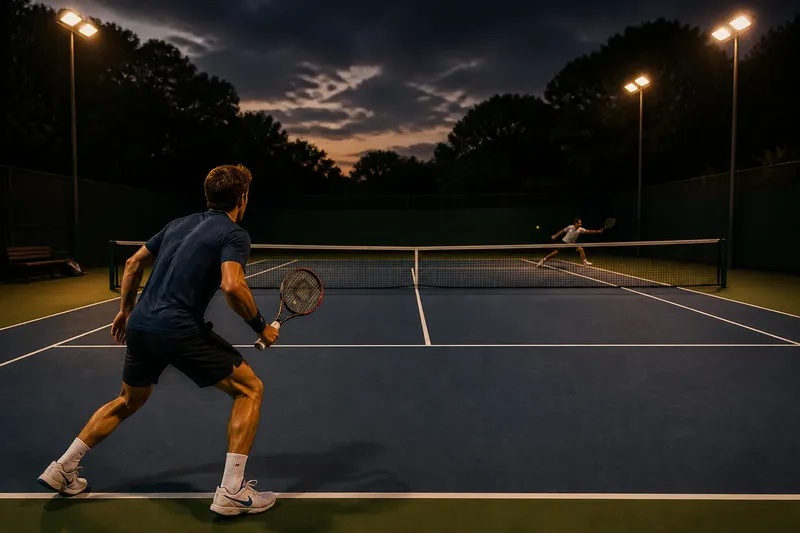
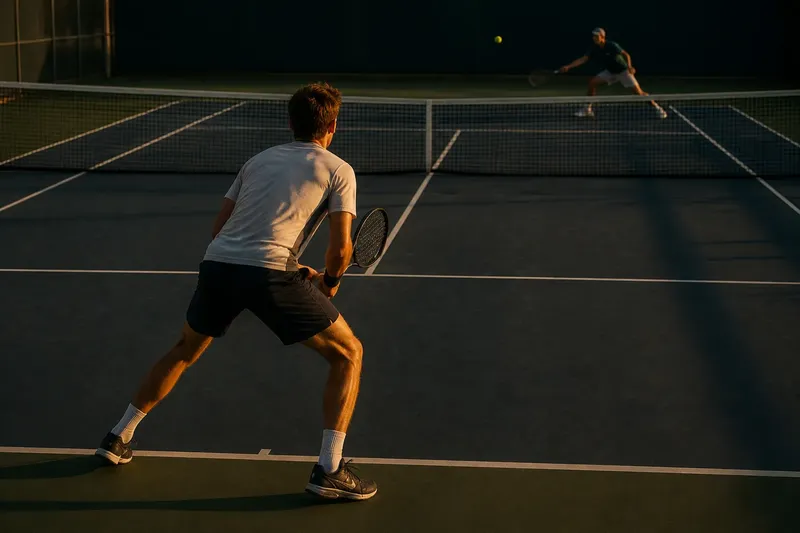
The High Ball Choice: Reset, Redirect or Take It Early?
The high ball choice depends on height, court position and time. Learn when to reset, redirect or take it early without forcing a single answer.

The most common mistake with a high ball is deciding what to do before noticing where it will arrive. A player sees a ball above shoulder height and swings hard, even when they are deep, off balance or still moving backward. The result is often a short reply that gives the opponent an easy next shot. The high ball choice—reset, redirect or take it early—starts with the ball’s height, your position and the time available.
These are options, not a fixed ranking. A reset sends a controlled, often higher ball back into the rally; a redirect changes its direction or pace; taking it early means meeting it on the rise, before it reaches its highest point. The useful response is the one that fits the arrival and leaves you able to play the next ball.
Why does the ball feel harder than it looks?
A high ball can appear slow while still creating a difficult contact. Its bounce may carry it above your comfortable hitting zone, and its flight gives you time to admire it but not necessarily time to get balanced. If you wait flat-footed, the ball can move behind your hitting shoulder before you commit.
Height alone does not tell you whether to attack. Notice whether the bounce is still climbing, whether you can get behind it, and whether your feet are set to move forward or sideways. The same ball can invite an early contact near the baseline and call for a safer reset when it pushes you toward the back fence.
Use the bounce as a moving reference, not a cue to swing bigger.
What if you keep hitting long from behind the baseline?
What usually causes it: You may be trying to hit down on a ball that is high but also deep. Reaching up and driving forward can send the racket face through the ball at a steep angle, while backward momentum makes it harder to control the finish. The shot feels forceful, but the contact point is not helping you direct it.
What to try: Create space by moving behind the bounce rather than letting it crowd your body. If you cannot get balanced in time, choose a reset: use a compact swing and send the ball with enough height and depth to make the opponent play another shot. Aim through a broad central corridor rather than skimming a sideline.
Imagine you are pushed several steps behind the baseline and the ball lands deep on your forehand side. If you arrive late and still moving back, a controlled, high reply through the middle is a more sensible choice than a sharp crosscourt drive; the visible aim is to keep the ball in and regain time to organize for the next shot.
Try the reset when your contact point is behind you or your weight is still moving away from the court.
Why does a high ball land short after you attack?
What usually causes it: You may be contacting the ball near its peak but brushing upward too much, or you may be trying to add pace while leaning back. Either can leave the ball without enough forward travel. A high contact does not automatically create a put-away opportunity; the ball may still be deep, and your position may still be defensive.
What to try: First ask whether you can move forward into contact. If so, take the ball early with a compact, firm swing and a clear target. Keep the aim modest: a deep shot toward the middle third can pressure the opponent without requiring a narrow angle. If you cannot move through the shot, use a reset instead of forcing a winner.
A useful distinction is between an early contact and an aggressive intention. You can meet the ball on the rise to prevent it from climbing higher, yet still play a measured ball. Taking time away from the opponent does not require taking on a risky target.
What if your attempted redirect floats into the opponent’s strike zone?
What usually causes it: You may be changing direction before you have secured a stable contact. A crosscourt ball can tempt you to turn the shoulders early, while a down-the-line attempt asks for a different racket path and more precise timing. If your feet are still adjusting, the racket face may open and send the ball upward without enough depth.
What to try: Redirect only when your balance and contact point support the change. Keep the swing shape familiar and let the target change through your body alignment and racket path, rather than making a sudden wrist flick. If the ball is high but you are stretched wide, a neutral reply back toward the middle may be safer than trying to reverse direction sharply.
Before changing direction, check whether you can hold your finish without falling away from the shot. If not, simplify the target.
How should height, position and time shape the choice?
Use three observations in sequence. They help you decide without turning every high ball into a complicated calculation:
- Height: Is the ball still rising, near its peak or already dropping into your hitting zone? A rising ball may be easier to take early; a dropping ball can leave more room to shape a controlled reply.
- Position: Are you inside the baseline, near it or being pushed behind it? Forward court position makes a firmer response more plausible, while deep or stretched contact favors a reset.
- Time: Can you set your feet and choose a target, or are you still chasing the bounce? When time is short, reduce the size of the swing and simplify direction.
Then choose the response that suits the combined picture, not one cue in isolation. A ball at shoulder height may be attackable if you are balanced and moving forward, but the same height can be awkward if you are backing up or reaching across your body.
Which high-ball choice fits these common situations?
When should you reset instead of attack?
Reset when the ball pushes you behind the baseline, crowds your body or arrives while you are off balance. A higher, deeper reply through a generous target can keep the point playable while you recover your position.
When is it sensible to take the ball early?
Take it early when you can meet the rising ball in front of your body and remain balanced through contact. A compact shot toward a safe, deep target can prevent the opponent from using the extra height to move you back.
When is a redirect worth the risk?
Redirect when your feet are set, your contact point is comfortable and the new direction has a clear purpose. If you are reaching or leaning, keep the ball in a simpler lane rather than changing direction just to surprise the opponent.
Should you hit a high ball with topspin or a flatter drive?
Either can fit, depending on the contact and your control. Topspin can help shape a higher, safer trajectory, while a flatter drive can suit a stable contact in front; choose the swing you can direct without losing balance.
How can you practice the decision without rehearsing one answer?
Ask a partner to feed varied high balls rather than repeating the same comfortable bounce. Before each feed, start from a different position: near the baseline, a step inside it or a little behind it. Call out “reset,” “redirect” or “early” as you recognize the situation, then play the shot with that intention.
After each point, note one observable detail: whether contact was in front, whether you were moving backward, or whether your target was wider than your margin allowed. Change one decision on the next ball. This keeps the practice focused on reading the arrival, not on judging yourself by whether an ambitious shot happened to land in.
If a particular feed keeps producing late contact, adjust your starting position or ask for a slower, more varied feed. The aim is to learn what you can handle while balanced, not to force an aggressive response to every high bounce.
What is the simplest cue to remember during a point?
Ask, “Can I move through this contact?” If the answer is yes, taking the ball early or redirecting may fit; if the answer is no, a reset can preserve control and give you room to recover. The high ball choice is less about labeling a shot as attacking or defensive than recognizing what your feet and contact point allow.
On court, make the first decision with your movement: get behind the bounce when you need space, or step forward when the rising ball offers a stable contact. Then choose a target you can see clearly. That small sequence—arrive, balance, select—turns the high ball choice into a response to the point in front of you, rather than a reflex to its height.