The Recovery Step Is Not a Return to Centre
Tennis recovery position is about covering an opponent’s likely replies, not running to court centre; learn how shot direction and balance shape your next move.
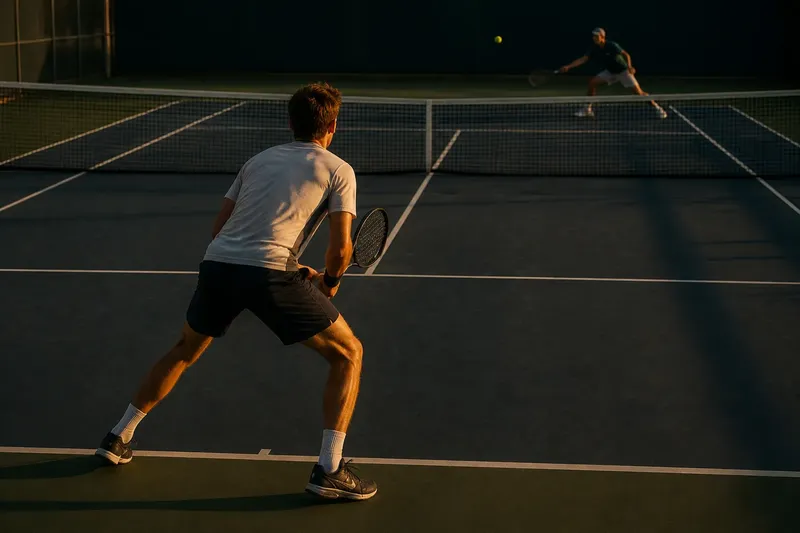
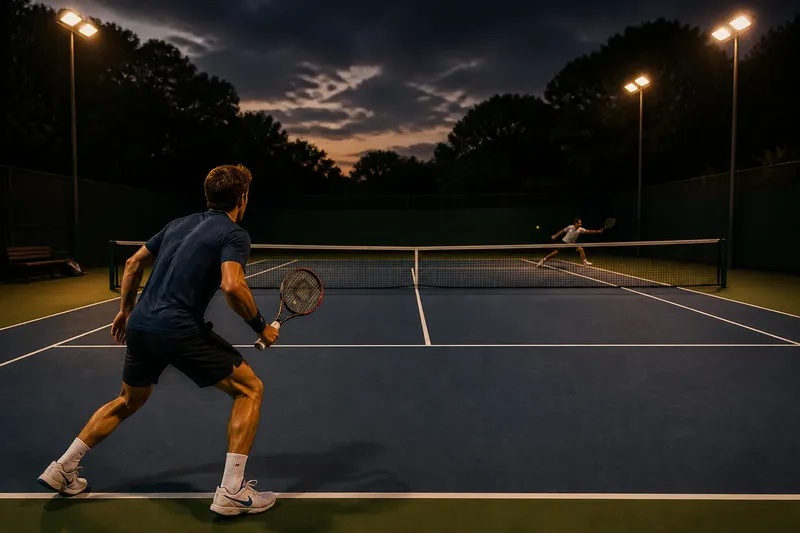
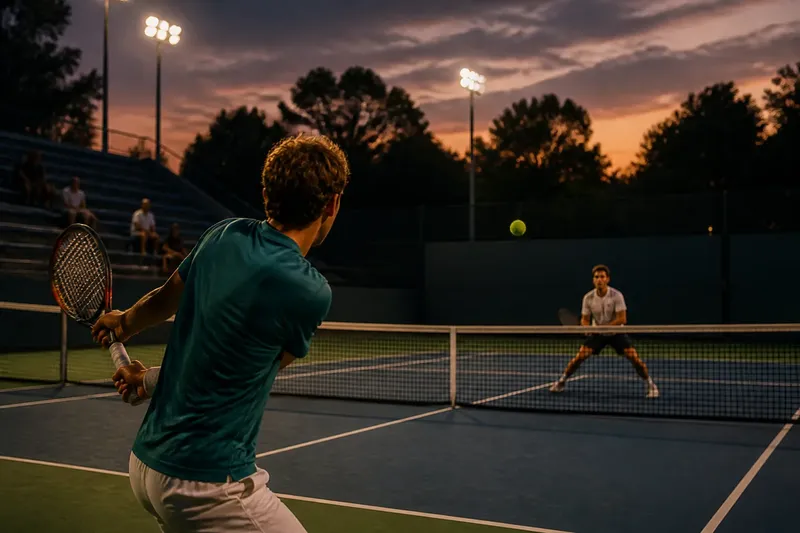
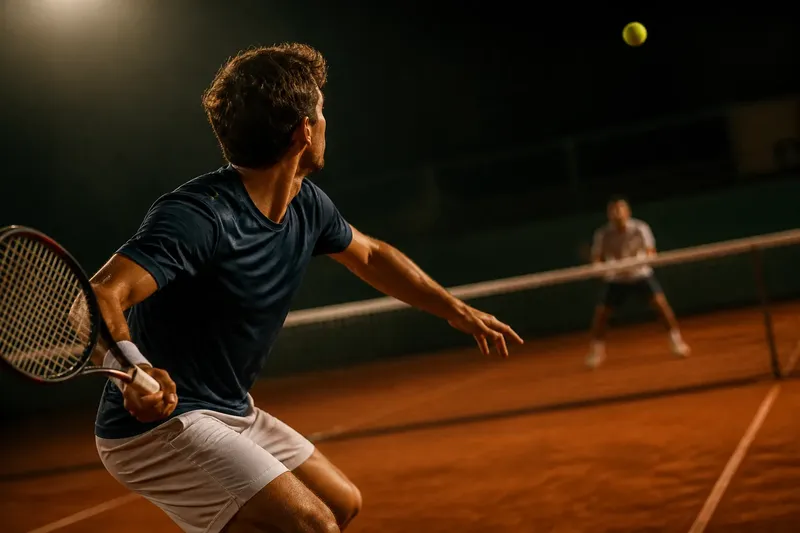
The common mistake after a tennis shot is to run straight back to the court’s exact middle. That movement can leave the next ball exposed: recovery position should put you where you can respond to the opponent’s likely options, not where the court looks most symmetrical.
The distinction matters because a point is a sequence of choices, not a series of isolated shots. Where you recover depends on where your ball landed, how much time your opponent has, and which replies are realistically available to them. The right position changes as those conditions change.
What does recovery position mean?
Recovery position is the place a player moves toward after striking the ball so they are ready for the opponent’s next shot. It is a working position, not a fixed mark on the court. A player might move forward, shade toward a sideline, or hold near the center, depending on the situation.
“Center” is often used loosely. The geometric center is halfway between the sidelines and halfway between the baselines; the useful recovery point is closer to the middle of the opponent’s available reply angles. Those locations may overlap, but they are not interchangeable.
Imagine you hit a deep ball toward your opponent’s backhand corner and remain balanced after contact. If the ball pushes them behind the baseline, their short reply angles may be difficult to create. You may reasonably recover a little toward the backhand side, rather than sprinting to the exact center and giving up that coverage.
Move to a position that answers the opponent’s options, not the court’s midpoint.
Why can the middle be the wrong target?
From near the court’s middle, a player may appear to have equal distance to both sidelines. But the opponent is not choosing from every point on the court with equal ease. Their contact location, body position, balance, and the incoming ball all shape what they can send back.
A deep, fast ball can limit an opponent’s ability to take it early or sharply change direction. A slower ball that sits comfortably may give them more time to aim across the court. The same shot direction can therefore call for different recovery positions depending on the quality of the incoming ball and the opponent’s contact.
The middle can also be too far forward or too far back. After a short approach shot, retreating to the baseline midpoint may leave a reply at the feet uncomfortable. After a deep defensive shot, charging toward the service line may expose you to a ball you cannot reach. Recovery includes choosing depth as well as side-to-side position.
How should you read the opponent’s options?
Start with the opponent’s likely contact point. A player stretched wide, contacted behind the baseline, or reaching for a low ball has fewer comfortable directions than a player set behind a ball at waist height. This is not a promise about what they will do; it is a practical estimate of which replies are easiest for them to produce.
Then consider the geometry. From a contact point near the sideline, the crosscourt path gives more room over the net and into the court than a direct line down the sideline. A down-the-line reply is still possible, but it often requires better timing or control. Your recovery can lean toward the more accessible crosscourt route while keeping enough room to move the other way.
Finally, notice whether your own shot has taken time away. A ball that lands deep and makes the opponent move backward may leave you time to recover. A short ball that lands near the service line may invite an attack and require you to prepare sooner. The point is to update your position from the actual situation rather than follow a memorized route.
How does tennis recovery position change by situation?
Where should I recover after a crosscourt shot?
After a crosscourt shot, begin by judging the opponent’s contact point and whether they are balanced. If they are stretched toward the sideline, shade toward the likely crosscourt reply, but keep your stance open enough to move toward a down-the-line change.
Should I recover toward the middle after a down-the-line shot?
A down-the-line ball usually gives the opponent a crosscourt angle, so recovery often shifts toward the side that helps cover that route. How far you shift depends on the opponent’s contact and your shot’s depth; do not abandon the line if they are well placed to redirect.
Where should I stand after an approach shot?
Move forward to a position that lets you respond to a passing shot or a ball at your feet, rather than automatically returning to the baseline. The depth of your approach and the opponent’s contact point help determine whether you can close farther or should hold back.
What if I am off balance after hitting?
Regain balance before trying to reach an ideal recovery spot. A small adjustment that keeps you stable and able to push off is more useful than a large sprint that leaves you leaning or crossing your feet.
What does a useful recovery movement look like?
Recovery is not one long run to a final destination. It often begins with a balanced landing after the shot, continues with a few quick adjustment steps, and ends in a stance from which either direction is available. Small steps help you change course as the opponent’s contact becomes clearer.
Try to avoid drifting while watching your own shot. Once the ball leaves your strings, turn your attention to the opponent’s position and move with control. If you are still traveling as they make contact, you may be unable to react promptly even if you are standing near the right area.
Say you hit a deep ball to the deuce-side corner and notice the opponent has to reach while moving away from the center. You take a controlled step toward the likely crosscourt return, then make a short adjustment as they prepare to hit. The observable result you want is a stance that lets you push either way, rather than one that commits you to a guessed direction.
How can you practice choosing the position?
A useful practice is to pause briefly after each shot in a cooperative rally. Before the next ball arrives, say where the opponent made contact and which reply seems easiest. Then move to a recovery position and continue the rally. The aim is to connect the incoming shot’s location to your next position, not to memorize a single spot.
You can also ask a partner to vary depth and direction without trying to win the point. Notice how a deep ball, a short ball, and a wide ball alter your available time and the opponent’s likely replies. Keep the exercise comfortable and adjust it to your skill level; a coach can help identify movement habits that are hard to see alone.
- After contact, check whether you are balanced before moving.
- Locate the opponent’s likely contact point.
- Estimate which reply has the clearest path and which remains possible.
- Choose recovery depth as well as lateral direction.
- Use small adjustment steps as the opponent prepares.
- Keep your body ready to push toward either side.
These checks are useful because they connect movement to information. If your opponent’s position changes, your recovery point should be able to change with it.
When should you avoid shifting toward the likely reply?
Shading toward the most likely direction is not the same as deciding that the opponent cannot hit elsewhere. If the opponent is balanced and has time, they may be able to redirect the ball. In that case, an extreme shift can turn a reasonable guess into an open court.
Your own shot also matters. If it lands short and gives the opponent a comfortable contact, assume they have more choices than they would against a deep or awkward ball. Stay balanced and preserve access to both sides instead of moving early based on the direction you expect.
Likewise, do not chase a theoretical position when the point has already become urgent. If you are late or recovering from a wide stretch, prioritize getting stable and making the next ball playable. A position is useful only if you can reach it without losing the ability to move again.
Thinking about tennis recovery position this way turns “get back to the middle” into a more precise question: where can you cover the opponent’s easiest reply while staying ready for the less likely one? Start with contact point, depth, and balance, then adjust as the point unfolds. A good recovery is not a destination; it is a position that keeps your next decision open.